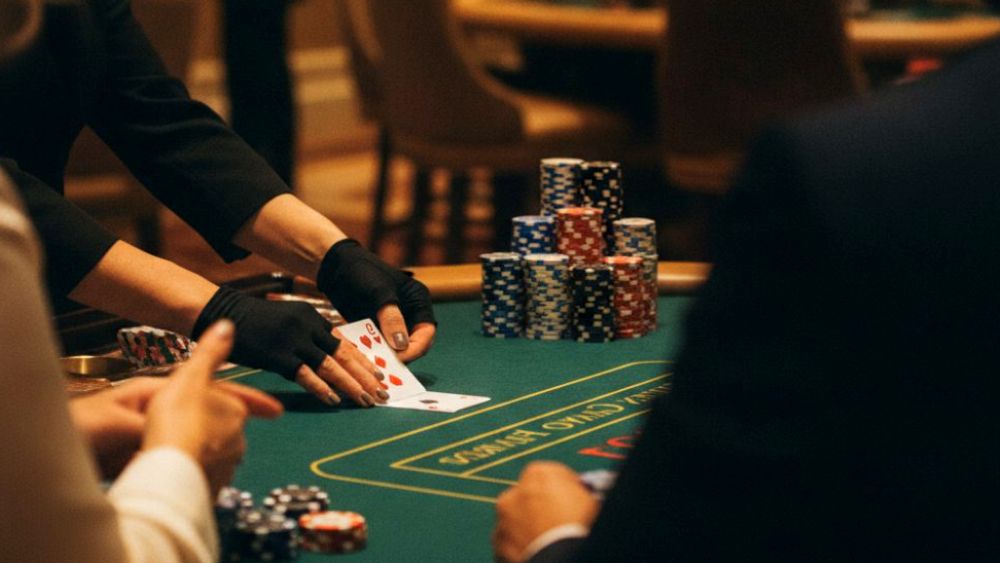
Why Pusoy Dos Is the Life of Every Filipino Gathering
If you've ever been to a Filipino party, you've seen it: a group huddled around a table, cards slapping down, someone shouting 'Dos!' while others groan. That's Pusoy Dos, the game that turns a simple deck of cards into a battlefield of wits. It's not just a game; it's a rite of passage. Whether you're at a family reunion in Cebu or a barkada night in Manila, knowing Pusoy Dos rules is your ticket to the action.
But here's the thing: while the basics are easy to pick up, the nuances can trip up even seasoned players. That's why we're breaking down the rules from a local player's perspective—no fluff, just what you need to sit down and play like you've been doing it since you were a kid. And if you're into casino games, you'll find that the strategic thinking behind Pusoy Dos translates well to other card games like poker or even baccarat. So let's dive in.
The Basics: What You Need to Know Before You Deal
Pusoy Dos, also known as 'Filipino Poker' or 'Chinese Poker' in some circles, is a shedding game. The goal is simple: be the first to get rid of all your cards. But don't let the simplicity fool you—there's plenty of room for strategy and bluffing.
Players and Deck
Typically, Pusoy Dos is played with 2 to 4 players. The standard deck is 52 cards, no jokers. In some variations, jokers are used as wild cards, but we'll stick to the classic version for now.
Card Rankings
The ranking of cards is a bit different from your usual poker. Here's the order from lowest to highest:
- 3, 4, 5, 6, 7, 8, 9, 10, J, Q, K, A, 2
Yes, the 2 is the highest card, not the lowest. And the suits also matter when comparing cards of the same rank:
- Diamonds (lowest), Clubs, Hearts, Spades (highest)
So the 3 of Diamonds is the lowest possible card, while the 2 of Spades is the highest.
Hand Rankings: What Beats What
Understanding hand rankings is crucial. In Pusoy Dos, you'll encounter several types of combinations. Here's a rundown from lowest to highest:
- Single card: Any one card.
- Pair: Two cards of the same rank.
- Three of a kind: Three cards of the same rank.
- Straight: Five consecutive cards of any suit. Note: A-2-3-4-5 is not a straight; the 2 cannot be used as a low card. Straights go from 3-4-5-6-7 up to 10-J-Q-K-A.
- Flush: Five cards of the same suit, not in sequence.
- Full house: Three of a kind plus a pair.
- Four of a kind: Four cards of the same rank.
- Straight flush: Five consecutive cards of the same suit.
- Royal flush: The highest straight flush: 10-J-Q-K-A of the same suit.
But wait, there's a twist: in Pusoy Dos, a five-card hand can also include a 'double straight' or 'double flush'? Actually, no—that's for other variations. Stick to the basics above.
One more thing: some versions allow a 'dragon' (a straight from 3 to A), which is the highest straight. But in standard rules, the royal flush is king.
How a Round Unfolds: Dealing, Playing, and Winning
Now that you know the cards, let's walk through a typical round.
Dealing
Choose a dealer. The dealer shuffles and deals all 52 cards to the players. With 4 players, each gets 13 cards. With 3 players, some variations remove a card or two to make it even, but usually, each player gets 17 cards, and one card is left aside. With 2 players, each gets 13 cards, and the remaining 26 are set aside? Actually, for 2 players, you'd typically use only half the deck or adjust. But for simplicity, we'll focus on the 4-player game, which is most common.
Playing
The player with the 3 of Diamonds starts the first trick. They must play that card, either as a single or as part of a combination. Then, play proceeds clockwise. Each subsequent player must play a higher card or combination of the same type. If they can't or choose not to, they pass.
When all other players pass, the last player to play gets to lead the next trick. They can play any valid combination.
Special Rules
There are a few special rules to keep in mind:
- Bomb: A four of a kind can beat any single card or combination except a higher bomb or a straight flush. Some variations allow a bomb to beat anything, but that's not standard.
- Straight flush: Beats everything except a higher straight flush.
- Passing: If you pass, you can still play later in the same trick if it comes back to you? No, once you pass, you're out for that trick.
The round ends when one player has no cards left. That player wins. In some games, the remaining players continue to determine second and third places, but typically, the winner takes all.
Local Variations: How Filipinos Play It
Like any game that's been passed down through generations, Pusoy Dos has its own set of local variations. Here are a few you might encounter:
Pusoy Dos with Jokers
Some groups add two jokers as wild cards. A joker can represent any card, which can make for some wild hands. But beware: if you're playing with jokers, a 'natural' hand might beat a hand with jokers in some circles.
Pusoy Dos na May Bahay
In some versions, there's a 'house' rule where the dealer gets an extra card or has to follow a specific rule. This can vary from family to family, so always ask before you play.
Scoring
While some play just for fun, others play for money. In scoring versions, the winner gets points based on the cards left in opponents' hands. For example, each card left might be worth 1 point, and a 2 might be worth 5 points. The first to reach a set score wins the game.
If you're playing in a casino setting, which is rare for Pusoy Dos, the rules might be stricter. But for the most part, it's a backyard game.
Strategy Tips from a Local Shark
Want to win more often? Here are some strategies that regular players use:
- Control the 2s: The 2 is the highest card, so holding onto them can give you control in the endgame. But don't hoard them too long—you might get stuck with them.
- Watch the suits: Since spades are highest, a 2 of spades is unbeatable as a single. Use that to your advantage.
- Plan your combinations: Try to form straights and full houses early. These are hard to beat and can help you shed multiple cards at once.
- Bluff: If you're leading, you can play a low card to bait others into playing higher cards, then surprise them with a bomb later.
- Count cards: Keep track of what's been played, especially the high cards. This helps you know if your remaining cards are likely to win tricks.
Remember, Pusoy Dos is as much about psychology as it is about cards. Reading your opponents is key.
Where to Play Pusoy Dos in 2026
While Pusoy Dos is mostly a home game, you can still find it in some places. Online casinos in the Philippines have started offering Pusoy Dos variants, especially on platforms that cater to local players. You can also find apps and websites dedicated to the game.
If you're in Manila, check out local bars or community centers that host game nights. And of course, there's always the classic: a family gathering. Nothing beats playing with relatives who take the game way too seriously.
Just remember, if you're playing for money, make sure it's legal and within your limits. Pusoy Dos is a game of skill, but luck plays a part too. Play responsibly.